A car that wanders can be hard to describe until you’ve driven one that tracks straight again. You’re not fighting the steering wheel, but you’re doing constant little corrections. On a straight road, it feels like the car wants to drift, then you nudge it back, then you nudge it again.
It can show up gradually, which is why many drivers chalk it up to road grooves or wind and keep going.
Why Wandering Is Easy To Ignore At First
Wandering often starts as a small change in steering feel, not a dramatic pull. The vehicle still goes where you point it, but it no longer holds a steady line without extra attention. If it came on slowly, your hands adapt, and you may not notice how much work you’re doing until you drive another car and realize the difference.
Road conditions can mask it too. Grooved pavement, crosswinds, and uneven road crowns can make any vehicle drift a bit. The giveaway is consistency. If you notice it on multiple roads, at multiple speeds, and in calm weather, it’s usually more than the pavement.
What Wandering Feels Like From The Driver Seat
Drivers describe wandering in a few common ways. The steering wheel may feel a little light in the center, like there’s a small dead zone before the car responds. Or the wheel may feel busy, where the car keeps drifting, and you’re correcting more than you used to.
You might also notice it’s worse on the highway than around town. That’s typical because small alignment and looseness issues become more obvious as speed increases. If the steering wheel doesn’t return to center the way it used to after a gentle turn, that’s another clue the front end geometry or a steering component may not be doing its job.
From Mild Drift To Unpredictable Handling
Early on, you’ll notice the car drifting slightly in your lane, especially at 55 to 70 mph. Then it can progress into a feeling that the car is never quite settled, particularly on long curves or when you pass a truck and get a gust of air.
As it gets worse, you may start seeing uneven tire wear, a steering wheel that sits off-center, or a sensation that the car changes direction slightly when you hit a bump. We’ve seen plenty of cases where the first noticeable sign was tire wear, not noise. That’s why it’s worth checking sooner, before you burn through tires or end up with a bigger steering repair list.
Common Causes From Tires And Alignment To Worn Parts
Tires are the easiest place to start. Low tire pressure, mismatched tires, or uneven tread wear can all create a wander. Tires with soft sidewalls can also feel more sensitive to road grooves. If the vehicle recently got new tires and the wandering started right after, tire construction and inflation are worth looking at first.
Alignment is next. Toe angle in particular has a big impact on straight-line stability. Too much toe out can make a car feel nervous and require constant correction. Camber issues can also contribute, especially if they’re uneven side to side.
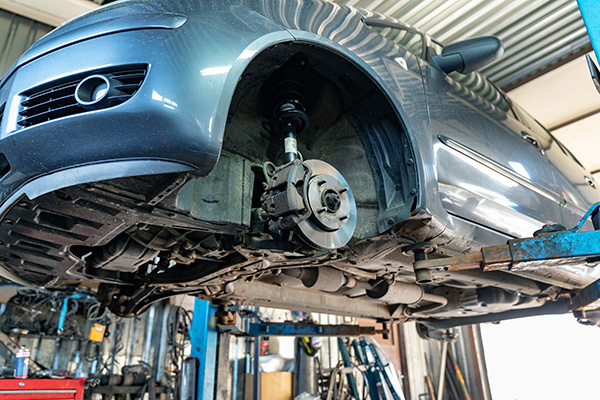
Then there’s play in steering and suspension parts. Tie rods, ball joints, control arm bushings, and even wheel bearings can loosen gradually. The car may still drive, but the wheels aren’t held as firmly as they should be under load. If the steering rack mounts or subframe bushings are worn on some vehicles, that can add a vague feel that an alignment alone won’t fix.
Test-Drive Cues That Help Narrow It Down
A few simple observations can point you in the right direction. If wandering is worse during braking, the front suspension or alignment angles may be shifting under load. If it feels worse after hitting bumps, looseness in steering components or worn bushings moves up the list.
If the car follows grooves in the road aggressively, tires and alignment are common contributors. And if you feel a light shimmy along with the wandering, don’t assume it’s only balance. A tire with uneven wear or a worn front end component can create both symptoms at the same time.
Habits That Make Wandering Worse
One common mistake is running tires underinflated because the ride feels softer. That can make the vehicle less stable and accelerate shoulder wear, worsening wandering over time. Another mistake is postponing rotations. Tires that develop uneven wear patterns can start steering the car, even when the alignment is close.
We also see drivers ignore a small curb hit or pothole impact because the car still drives. Those impacts can knock alignment out or stress steering parts just enough to create a drift that wasn’t there before.
A Quick Decision Guide Before You Keep Driving
If the car wanders slightly and you don’t notice noise, vibration, or tire damage, you can usually drive short distances while you schedule an inspection. If wandering is paired with a clunk, a steering wheel that feels loose, or a tire showing cords or bulges, reduce driving and get it checked quickly.
If the vehicle feels unpredictable during braking or lane changes, treat it as a priority. Straight-line stability is a safety issue, especially in wet weather or highway traffic.
Get a Steering And Suspension Inspection in Northridge, CA with RM Automotive
If your car keeps drifting and you’re tired of making constant corrections, we can inspect the tires, alignment angles, and steering and suspension components to find what’s causing it. We’ll explain what we see, show you any wear that affects stability, and lay out a repair plan that fits your vehicle and budget.
Schedule a steering and suspension inspection in Northridge, CA with RM Automotive, and we’ll help you get back to a car that holds its lane without the extra effort.