Posted on 10/15/2026
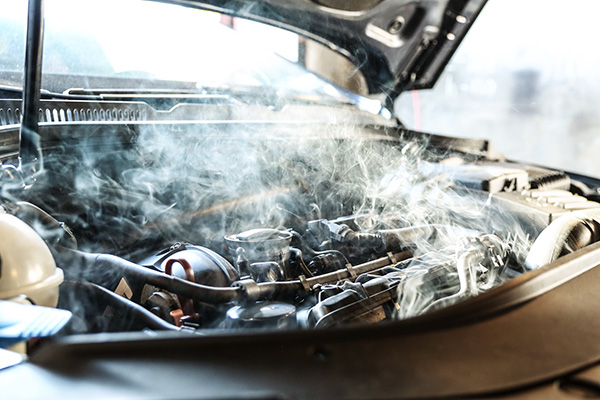
You notice a small coolant spot under the car, but the temperature gauge looks fine. The radiator has a crack, and the leak seems minor. Can you keep driving as long as you top off the coolant from time to time? A cracked radiator needs a prompt inspection because its behavior changes as the cooling system heats up and pressure builds. The size of a puddle after parking doesn't show how much coolant escapes while driving. A leak that seems manageable can turn into an overheating problem. A Radiator Crack Can Leak Differently When Hot The radiator releases heat from the coolant as air passes through its core. Its tanks, tubes, and connections work in a system that gets hot and pressurized. A crack may seep slowly when the car is cold, then lose coolant much faster once the engine reaches operating temperature. Some leaking coolant evaporates on hot surfaces instead of pooling, so residue or a steadily dropping level can tell you more than the size of a stain. Do ... read more
Posted on 9/30/2026
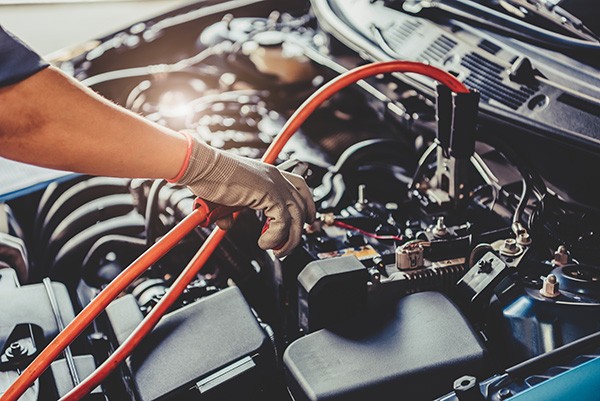
If the engine cranks at normal speed but does not start right away, the starter is probably doing its job. The engine is turning over, but one of the other things it needs for combustion is missing or arriving too late. That can mean fuel pressure is bleeding off, spark is weak, an injector is leaking, a sensor is giving the engine computer bad information, or the air-fuel mixture is wrong during startup. The way the car behaves between the first and second attempt gives us useful clues. Fuel Pressure May Be Bleeding Off While the Car Sits A fuel system is designed to build and maintain enough pressure for the injectors to deliver fuel immediately when you start the engine. If that pressure leaks down after the car has been sitting, the first crank cycle is partly spent rebuilding it. One simple clue is whether the engine starts more easily if you turn the key to the ON position for a few seconds before cranking, or if you cycle the key more than once. If that chan ... read more
Posted on 9/20/2026
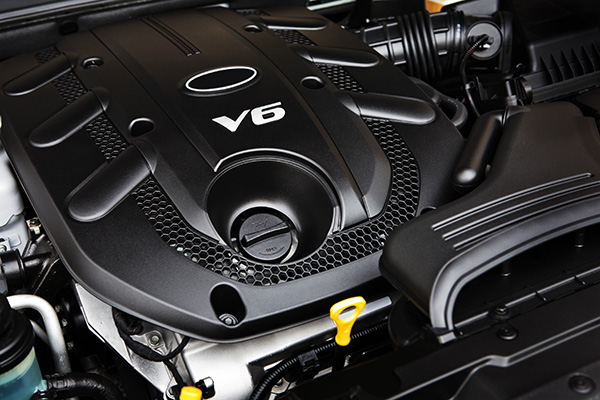
A car that runs fine while moving but stalls when you come to a stop is telling you something important. The engine can stay running with the throttle open, but once you lift off the accelerator and engine speed drops toward idle, something is no longer keeping combustion stable. Sometimes the engine catches itself and only dips low for a second. Other times it shuts off completely at a stoplight and restarts as soon as you turn the key. The cause can be airflow, fuel delivery, ignition, transmission load, or a control problem, which is why we look at what changes specifically when the vehicle returns to idle. A Dirty Throttle Body Can Let Idle Speed Drop Too Low The throttle body controls how much air enters the engine. On many modern vehicles, the engine computer moves the throttle electronically to maintain idle speed when your foot is off the accelerator. Carbon buildup around the throttle plate can restrict that small amount of airflow. The engine may idle low ... read more
Posted on 9/10/2026
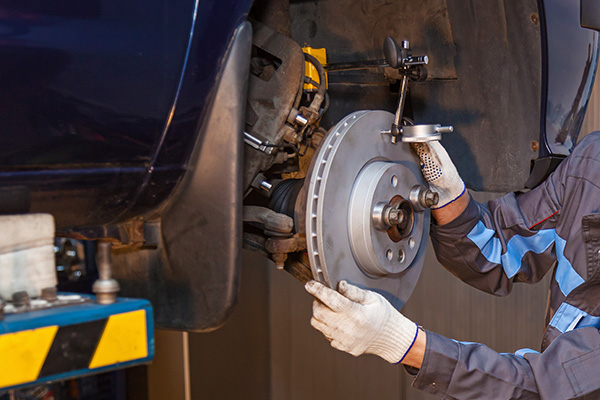
A wheel speed sensor does more than report whether one tire is turning faster or slower than the others. Modern vehicles use wheel speed information for anti-lock braking, traction control, stability control, transmission operation, hill-start assistance, electronic parking brakes, and several driver-assistance features. When one sensor fails or sends an inaccurate signal, the vehicle may turn off multiple systems at once. Drivers often see several dashboard warnings even though one sensor, damaged wire, corroded connector, or worn wheel bearing is responsible for the original fault. How Wheel Speed Sensors Work Each wheel speed sensor measures the rotation of a wheel or axle. Depending on the vehicle, the sensor reads a toothed reluctor ring, a magnetic encoder built into the wheel bearing, or another rotating target. The sensor sends a changing electrical signal to the ABS control module as the wheel turns. The control module compares all four wheel speeds. Durin ... read more
Posted on 8/29/2026
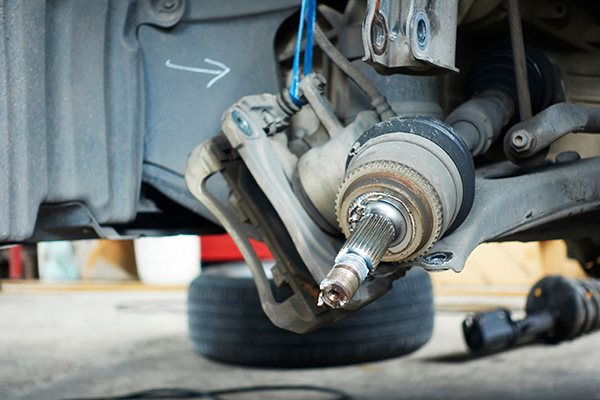
CV axles transfer power from the transmission or differential to the drive wheels while allowing the suspension to move and the wheels to steer. Each axle uses constant velocity joints that can operate through changing angles without interrupting power delivery. A CV axle can remain in service for many years, but torn boots, lost grease, contamination, impact damage, and normal wear eventually affect the joints. Early symptoms often begin with clicking, vibration, or grease around the inside of a wheel. Addressing these signs promptly can prevent a worn joint from failing and leaving the vehicle unable to move. 1. Clicking While Turning A repeated clicking or popping sound during a tight turn is one of the most recognizable signs of outer CV joint wear. The sound is usually strongest while accelerating through a parking lot turn, making a U-turn, or backing out with the steering wheel turned sharply. Outer CV joints operate through their greatest angle when the whe ... read more