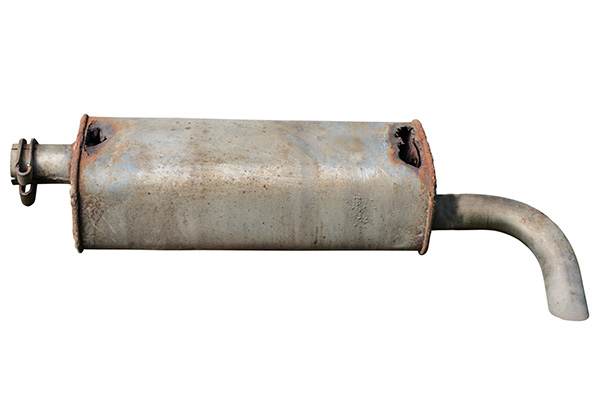
An exhaust leak can seem minor because the car still drives and the engine can feel perfectly fine. Then smog time comes around and you start wondering if that small tick or faint smell is going to cost you a retest. The tricky part is that a leak does not have to be loud to matter, and where it is located changes everything.
If you want to avoid surprises, the first step is understanding what the smog test is actually measuring.
How Smog Tests Interact With Exhaust Leaks
Smog testing mainly looks at emissions control performance and whether the vehicle reports faults through the onboard system. Depending on your area and model year, the test may include an OBD check, a visual check, and sometimes tailpipe sampling. Even without tailpipe sampling, an exhaust issue can still matter because it can trigger codes or affect sensor readings.
Leaks also change the exhaust stream in ways the engine computer cares about. The computer is constantly adjusting fuel based on sensor feedback. If a leak lets outside air in near a sensor, the data can be skewed, and that can lead to a check engine light or readiness problems right when you are trying to pass.
Leak Location Is The Big Decider
A leak before the catalytic converter is usually the most likely to cause trouble. That includes leaks near the exhaust manifold, gasket area, flex pipe, and upstream sensor locations. Those leaks can draw in fresh air and make the oxygen sensors think the engine is running lean. The computer then compensates, and that compensation can trigger fuel trim codes or efficiency codes.
A leak after the catalytic converter is often less likely to affect sensor readings, but it can still create noise and fumes. If the leak is large enough, it can still impact oxygen sensor behavior on some vehicles, especially if the leak is near a downstream sensor. So it is not just the size, it is the proximity to the sensors and the converter.
How A Small Leak Can Trigger Codes
Small leaks can create a ticking sound at cold start or a faint exhaust smell that fades once the system warms. Those leaks can expand as metal heats and contracts, which is why they can seem intermittent. Intermittent is still enough to trigger a code if the sensor data repeatedly falls outside expected ranges.
If the check engine light is on, the vehicle is very likely to fail an OBD-based smog check. Even if the light is off, stored codes or incomplete readiness monitors can still cause a failure. This is why it is a mistake to clear codes right before a test, because many vehicles need drive cycles to reset monitors, and you can show up with monitors not ready.
What We Check Before You Go To SMOG Testing
A proper exhaust inspection looks at the whole path, not just the loudest area. We check manifold connections, gaskets, flex joints, and pipe seams, and we also check sensor bungs and wiring. We look for soot marks and carbon trails because leaks often leave a telltale dark stain.
We also scan for codes and check readiness status. That step matters because a vehicle can be one drive cycle away from a ready state, or it can need a longer set of conditions to complete monitors. Regular maintenance helps here because a vehicle that is kept up tends to complete monitors more consistently and avoids last-minute issues like weak batteries and misfire history.
How To Avoid Failing From A Last-Minute Fix
If you are close to a smog deadline, do not wait until the day before. Repairs that involve sensors or exhaust components can require drive time to confirm the fix and allow monitors to run. Clearing codes too close to the test is one of the most common reasons people fail even after repairs, because monitors are not ready.
A better plan is to fix the leak, confirm there are no active codes, and then drive enough to let the monitors complete naturally. If you have a battery disconnected recently, the same advice applies. Give the car time to re-learn and complete its checks so you are not gambling at the test station.
Get Exhaust Leak Repair In Northridge, CA, With RM Automotive
If you suspect an exhaust leak and you have a smog test coming up, RM Automotive in Northridge, CA, can locate the leak, confirm whether it is affecting sensor readings, and repair it properly so you are not stuck paying for retests. We will also scan for codes and check readiness status, then tell you what needs to happen before you head to the station.
Schedule a visit and walk into your smog test with fewer unknowns.