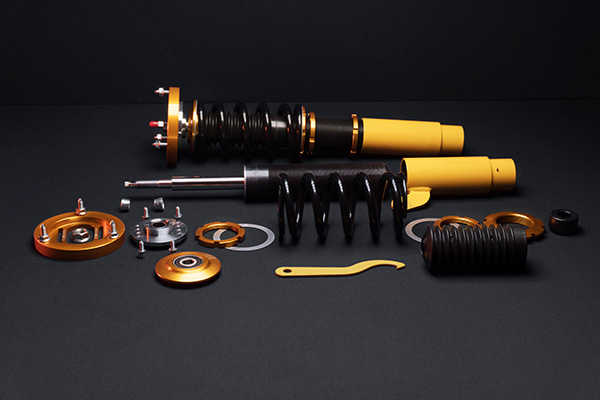
Suspension problems can sneak up because the change is usually gradual. The ride feels a little rougher, the steering takes more effort to control, or the car does not feel as settled over bumps. Since it still drives, many people keep putting it off.
Shocks and struts are two of the parts that help control how the vehicle moves. When they wear out, the car can become harder to handle, harder on tires, and less stable during braking or quick turns.
What Shocks And Struts Actually Do
Shocks and struts help control spring movement. Every time your tire hits a bump, the spring compresses and rebounds. Without control, the vehicle would bounce too much and feel loose on the road. Shocks and struts slow that motion, keeping the tires planted.
They do not perform the same job. A shock is usually a separate dampening part. A strut is part of the suspension structure and can affect alignment, ride height, and steering geometry. Both help control movement, but struts play a larger role in the suspension's design.
The Difference Between Shocks And Struts
A vehicle typically uses either shocks or struts at each suspension corner, though some use struts in the front and shocks in the rear. Struts support part of the vehicle’s suspension layout, while shocks mainly control bounce and movement. That is why strut replacement can be more involved than shock replacement.
The important thing for drivers is not memorizing the design. It is known that both parts wear over time, and both can change how the car feels. If the vehicle is bouncing, leaning, or diving, or if the tires are wearing unevenly, the suspension deserves a closer look.
Warning Signs Of Worn Shocks Or Struts
Suspension wear does not always sound serious at first. You might feel the car floating over dips, bouncing after bumps, or leaning more in turns. Some drivers notice the front end dipping during braking or the rear end squatting more during acceleration.
Common warning signs include:
- The car bounces more than it used to after bumps
- The front end dives when braking
- The vehicle leans more during turns
- Tires show cupping or uneven wear
- Clunking or knocking sounds come from the suspension
- The ride feels harsher or less controlled
These signs can come from shocks, struts, bushings, mounts, control arms, or other suspension parts. That is why an inspection is needed before deciding which part is actually worn.
Why Worn Suspension Affects Tire Wear
Tires need steady contact with the road. When shocks or struts lose control, the tires can start bouncing slightly instead of staying planted. That can cause cupping, scalloping, or uneven tread patterns, which shorten tire life.
The problem is not always obvious from behind the wheel. A tire can start wearing badly before the car feels terrible to drive. If one tire is getting noisy, one edge is wearing faster, or the tread feels uneven to the touch, suspension wear or alignment issues could be the cause.
Why Braking And Steering Can Feel Different
Worn shocks and struts can affect more than comfort. During braking, the vehicle’s weight shifts forward. If the front suspension cannot control that movement well, the nose can dive, and the tires can lose some of their steady contact with the road.
Steering can also feel less precise. The car may wander, feel loose at highway speeds, or take longer to settle after a lane change. Those changes can be easy to blame on tires or alignment, but suspension parts are part of the same conversation.
Do Shocks And Struts Need To Be Replaced Together?
Shocks and struts are commonly replaced in pairs across the same axle. That means both fronts or both rears are replaced together. Replacing only one side can leave the vehicle with uneven suspension control from left to right.
There are exceptions, but paired replacement is often the better repair. It helps the vehicle respond more evenly and keeps one new part from working against an old, worn-out part. During regular maintenance, checking these parts can also help catch leaks, weak mounts, and tire wear before the repair list grows.
When Suspension Repair Should Not Wait
A slightly rough ride is easy to ignore. The bigger concern is when the vehicle starts feeling loose, unstable, noisy, or harder to control. If the car bounces after bumps, pulls during braking, clunks over uneven pavement, or wears tires too quickly, waiting can cost more.
Suspension parts work together. Worn struts can stress mounts. Bad shocks can damage tires. Loose bushings can affect alignment. A focused check helps isolate a worn part from a larger front-end or rear-suspension problem.
Get Suspension Repair In Northridge, CA, With RM Automotive
If your car is bouncing, clunking, wearing tires unevenly, or feeling less stable than it used to, RM Automotive in Northridge, CA, can check the shocks, struts, and related suspension parts to find the cause.
Bring it in while the warning signs are still easy to track and before worn suspension starts affecting tires, braking, and control.