Posted on 8/29/2026
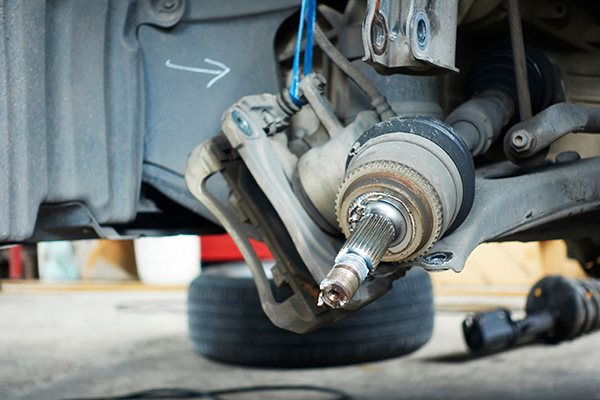
CV axles transfer power from the transmission or differential to the drive wheels while allowing the suspension to move and the wheels to steer. Each axle uses constant velocity joints that can operate through changing angles without interrupting power delivery. A CV axle can remain in service for many years, but torn boots, lost grease, contamination, impact damage, and normal wear eventually affect the joints. Early symptoms often begin with clicking, vibration, or grease around the inside of a wheel. Addressing these signs promptly can prevent a worn joint from failing and leaving the vehicle unable to move. 1. Clicking While Turning A repeated clicking or popping sound during a tight turn is one of the most recognizable signs of outer CV joint wear. The sound is usually strongest while accelerating through a parking lot turn, making a U-turn, or backing out with the steering wheel turned sharply. Outer CV joints operate through their greatest angle when the whe ... read more