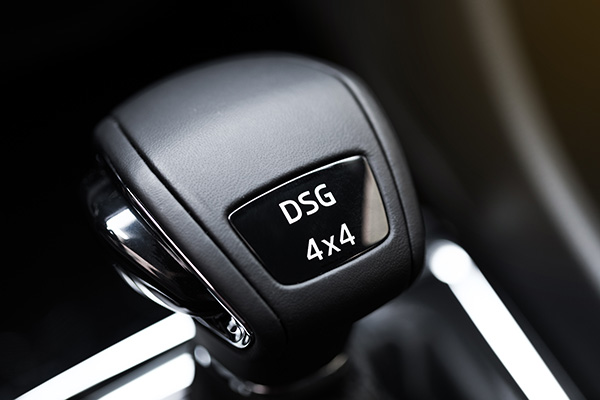
A lot of Audi and VW drivers notice right away that their cars shift differently than a typical automatic. The DSG transmission feels quick, smooth, and almost predictive when you get on the throttle. That is not an accident, it is a design that blends the feel of a manual with the convenience of an automatic.
Understanding what the DSG is doing behind the scenes helps explain why it can feel so strong and responsive on the road.
How the DSG Transmission Works in Audi and VW
A DSG is a dual clutch transmission, which means it uses two separate clutches and two sets of gears inside one housing. One clutch handles the odd gears, the other handles the even gears, and the computer can preselect the next gear before it is actually needed. When it is time to shift, the transmission simply hands power off from one clutch to the other.
That design lets the DSG change gears very quickly while keeping power flowing to the wheels instead of pausing between shifts.
Quicker Shifts and Stronger Acceleration
Because the next gear is already lined up, DSG shifts can be much faster than a traditional automatic. Under acceleration, that means the engine stays in its power band instead of dropping off between shifts. You feel this as a steady pull rather than a surge then a pause. On turbocharged engines, this helps keep boost pressure up, so there is less lag when you roll back into the throttle.
Our technicians often hear from drivers who are surprised at how much difference a healthy DSG makes in everyday passing and merging.
Efficiency Benefits Compared to Traditional Automatics
Performance is not the only advantage. The DSG can also improve efficiency because it does not rely on a torque converter the same way a conventional automatic does. With less slipping and more direct mechanical connection, more of the engine’s power makes it to the road. The fast, well timed shifts help keep the engine in a more efficient rpm range during normal driving.
In the real world, that can mean better mileage on the highway and more consistent fuel economy around town when the transmission is working correctly.
Driving Modes and Real-World Flexibility
Modern DSG setups usually offer several drive modes, which change how the transmission behaves. In a normal or comfort mode, it tends to shift early and smoothly, which keeps revs low and makes the car feel calm in traffic. Switch to a sport mode and the DSG will hold gears longer, downshift sooner, and react more aggressively when you press the pedal. Manual or paddle shift modes let you choose gears yourself while the computer still protects the transmission from harmful shifts.
That flexibility is what many Audi and VW owners enjoy, one transmission that can feel relaxed on the commute and sharp when you want more response.
Owner Mistakes That Hurt DSG Performance
The DSG is strong, but it is more sensitive to maintenance and driving habits than many people realize. Some of the most common issues we see start with avoidable mistakes such as:
- Skipping or stretching DSG fluid and filter services beyond the recommended interval
- Riding the brake and throttle together in tight parking lots, which creates extra heat in the clutches
- Launching hard repeatedly without cool down time, especially on hot days
- Ignoring early signs like shuddering when taking off or hesitations during low speed shifts
- Letting software updates and basic inspections go for years, even after noticing small changes in shift quality
Taking care of fluid changes on time and adjusting a few driving habits can go a long way toward keeping the DSG shifting crisply.
When a DSG Needs Professional Attention
Most DSG problems start with subtle changes rather than a sudden failure. You might notice a light shudder when starting from a stop, a slight delay when selecting drive or reverse, or a small jerk during low speed shifts in traffic. As wear progresses, those symptoms often become more frequent and more noticeable. You may feel harder engagements, more pronounced shuddering, or see warning messages related to the transmission or gearbox.
That is the point where it is best to have the vehicle checked, so a technician can look at fault codes, fluid condition, clutch adaptation values, and other data before damage spreads to more expensive parts.
Get DSG Transmission Service in Northridge, CA with RM Automotive
We understand how a DSG transmission should feel when it is healthy and how to spot early signs of trouble before they turn into major repairs. We can service DSG fluid and filters, diagnose shuddering or hesitation, and recommend repairs that protect both performance and reliability.
Call RM Automotive in Northridge, CA, to schedule DSG transmission service and keep your Audi or VW shifting the way it was designed to.