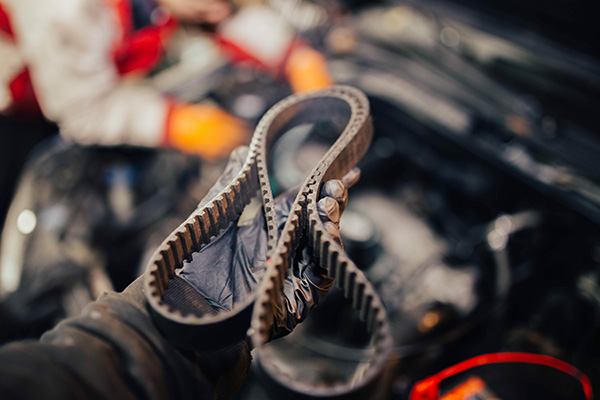
The engine is running normally, then the power vanishes, and the car starts to slow. A broken timing belt could cause that sudden shutdown. So what happens inside the engine the moment the belt lets go?
The belt keeps essential moving parts in sync. Once that connection is lost, the engine can't operate as intended. Some engines just stop without any valve-to-piston contact, while others can suffer serious internal damage. The engine's design and what happened during the failure decide what comes next.
The Timing Belt Keeps Crankshaft And Camshaft Movement Synchronized
The crankshaft moves the pistons, and the camshaft controls when the valves open and close. The timing belt links the two so the valves operate at the right points in the engine cycle. That coordination lets the cylinders draw in air, burn the mixture, and release exhaust as they should.
A broken belt instantly breaks that relationship. The engine loses its ability to maintain normal combustion and generally stops. A belt can also lose teeth or slip enough to disrupt timing without separating completely. Those failures still call for checking the timing system and possible engine damage. A belt that looks intact doesn't prove the synchronization is still correct.
Interference Engines Can Suffer Damage After Timing Belt Failure
In an interference engine, the valves and pistons can occupy overlapping areas at different points in their movement. Correct timing keeps them apart. If the belt fails while parts are moving, a piston can strike a valve that happens to be open at the wrong time.
Bent valves and other internal damage can follow, though how much depends on the engine and the circumstances of the failure. A new belt can't straighten a bent valve or restore a damaged component. Before anyone promises a belt replacement will get the car back on the road, the technician must assess the engine's condition and what repairs it needs.
A Non-Interference Engine Still Stops With A Broken Timing Belt
A non-interference design normally has enough clearance to avoid piston-to-valve contact when timing is lost. That can lower the odds of that particular internal damage, but the engine still can't run properly until synchronization is restored. The failed belt, and whatever caused it to fail, need attention.
Don't guess the design based on engine size, cylinder count, or the vehicle's age. You must identify the exact engine. Other damage or related component failures may be present too. Even when the engine dodges valve contact, the repair should address a seized pulley, a leaking seal, or a failed tensioner, not just install a belt and ignore the cause.
A Timing Belt Failure Can Change How The Engine Sounds
The engine may stop suddenly, refuse to start, or sound different when cranking, because compression and valve movement are no longer normal. Those observations can support a timing-system check, but they're not a reliable roadside way to distinguish belt failure from other engine shutdowns.
A fuel, ignition, electrical, or mechanical fault can cause a stall too. If timing failure is possible, avoid repeated attempts to restart an engine that stopped suddenly, since more rotation can add damage in some cases. Describe what you heard and what the vehicle did before it stopped, then arrange a professional inspection instead of continuing to test it with the starter.
A Suspected Timing Belt Failure Calls For A Safe Stop
If the engine loses power while you're driving, focus on controlling the vehicle and getting to a safe place. Steering or brake assistance may change when the engine stops, depending on the vehicle, so follow its emergency operating guidance. Use your hazard lights when appropriate and arrange roadside assistance.
Don't drive the vehicle if it can't run normally, and don't try to tow-start it to get around a suspected belt problem. Once you're safely stopped, note any warning messages and the conditions just before the shutdown. Those details help the shop determine whether timing failure occurred and what to inspect before turning the engine over again.
Timing Belt Repair Should Include Related Components
A timing system can include tensioners, idler pulleys, and a water pump on engines where the belt drives it. Their condition and the manufacturer's procedure shape the scope of the repair. A failed bearing or incorrect tension can destroy a replacement belt if the underlying cause remains.
Questions to ask about timing belt repair include:
- Has the technician checked the exact engine for internal damage?
- Which pulleys, tensioners, seals, or belt-driven components need attention?
- What caused the belt failure, and how will that cause be addressed?
The repair estimate should separate timing-system work from any additional internal engine repair.
Scheduled Timing Belt Replacement Helps Avoid A Sudden Failure
Follow the replacement interval for your exact engine, including both mileage and time limits where they're specified. Don't apply a universal interval from another car. Age, contamination, and related component problems can affect the belt even when the vehicle hasn't racked up many miles.
Service records are especially useful when you're buying a used vehicle or taking over maintenance of a car with an uncertain history. A quick visual inspection can't guarantee how much life a concealed belt has left. Reviewing the schedule and completing the required service is a practical way to avoid learning about overdue timing maintenance through an engine shutdown.
Get Timing Belt Service In Northridge, CA, With RM Automotive
RM Automotive in Northridge, CA, can review timing belt requirements, inspect suspected timing failures, and explain the repair your engine needs. We can help you tell scheduled belt service apart from the additional work required after a failure.
Contact us to schedule timing belt service or an inspection of a suspected timing-system failure.