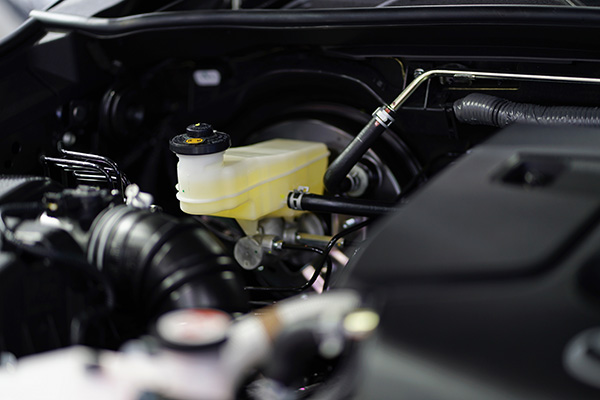
Brake fluid has a thankless job. It sits in a sealed system, never gets seen during normal driving, and only gets attention when the pedal feels strange, or the reservoir looks dirty. Since the brakes still stop the car most days, old fluid is easy to ignore.
Inside the brake system, though, fluid age makes a difference. Brake fluid is exposed to heat, moisture, rubber seals, metal lines, calipers, ABS valves, and constant pressure changes. When it gets old, it can quietly become less protective and harder on the parts it is supposed to help.
Brake Fluid Transfers Pedal Force
When you press the brake pedal, you are not directly squeezing the brake pads yourself. The pedal moves the master cylinder, which pushes brake fluid, and that fluid carries pressure through the lines to the brakes at each wheel.
That pressure has to be firm and predictable. Brake fluid is used because it does not compress as air does. As long as the system is full of clean fluid and free of air, the pedal can quickly transmit force to the brakes.
The fluid also has to survive heat. Braking turns vehicle motion into heat at the pads, rotors, drums, and calipers. Some of that heat travels into the hydraulic parts, especially during repeated stops, traffic, hills, towing, or hard braking.
Moisture Slowly Gets Into The Fluid
Brake fluid absorbs moisture over time. The system is sealed, but it is not locked away from the world forever. Tiny amounts of moisture can enter through hoses, seals, reservoir venting, temperature changes, and normal service work.
That moisture changes the fluid. Fresh brake fluid can handle high temperatures. Fluid with too much moisture boils at a lower temperature. When brake fluid boils, it can create vapor pockets inside the hydraulic system.
Vapor compresses. Fluid does not. That is why moisture-heavy brake fluid can make the pedal feel soft, long, or less confident when the brakes are hot.
Corrosion Starts Where You Cannot See It
Old brake fluid can become rough on the inside of the brake system. Moisture and depleted additives can encourage corrosion in metal lines, calipers, wheel cylinders, master cylinders, and ABS hydraulic units.
That corrosion usually starts hidden from view. You may not see it when looking at the reservoir. You may not feel it during a quick drive around the block. But inside small passages and around seals, the damage can begin long before a warning light appears.
This is one reason brake fluid service is preventive. It is not just about how the pedal feels today. It is about protecting expensive, sometimes difficult-to-access parts.
The ABS System Depends On Clean Fluid
Modern brake systems are not just a master cylinder, lines, and calipers. The ABS has valves, pumps, sensors, and small hydraulic passages that help control braking during traction loss or hard stops.
Dirty or moisture-heavy fluid is not good for those parts. Contamination can affect small passages and valves. Corrosion inside the hydraulic unit can become a costly problem. Once ABS components are damaged, a simple fluid service may no longer be enough.
A brake fluid flush helps remove old fluid and replace it with clean fluid that meets the vehicle’s specifications. On some vehicles, the ABS system may require the correct procedure to ensure fluid is properly exchanged through the hydraulic unit.
Old Fluid Can Change Pedal Feel
One of the first things a driver may notice is a change in pedal feel. The pedal may travel farther than before, feel slightly spongy, or feel normal during light stops but weaker during repeated braking.
Heat usually exposes the issue. A car may stop fine during calm neighborhood driving, then feel different after a long downhill road or several stops in traffic. That kind of change is easy to dismiss until it happens during a stop where you really need full confidence.
Old fluid is not the only cause of a soft pedal. Air in the lines, leaks, worn brake hoses, master cylinder problems, or caliper issues can feel similar. That is why an inspection should check the whole system.
What Technicians Look For
Brake fluid service should never be treated like a blind upsell. There are real clues that help decide whether the fluid needs attention.
- Fluid color and clarity can show contamination, especially when the fluid looks dark, cloudy, or dirty compared with fresh fluid.
- Moisture content testing can show whether the fluid has absorbed enough water to reduce its heat resistance.
- Service history helps because brake fluid can be overdue even when it still looks decent in the reservoir.
- Brake pedal feel tells part of the story, especially if the pedal gets softer after repeated stops or feels lower than it used to.
- Leaks and low fluid levels need to be checked carefully, because topping off the reservoir without finding the cause can mask a hydraulic problem.
- Brake repairs may call for fluid service when calipers, hoses, wheel cylinders, lines, or the master cylinder have been replaced.
These checks give context. They help separate old fluid from other brake problems that require different repairs.
Why Topping Off Is Not The Same As Flushing
Adding fluid to the reservoir is not the same as replacing the old fluid in the system. The reservoir only holds part of the fluid. Old fluid can remain in the brake lines, calipers, wheel cylinders, and ABS unit.
Topping off may be needed if the level is low, but the cause of the low level must be understood. Brake fluid can drop as pads wear, but it can also drop because of a leak. A reservoir that keeps needing fluid is a warning sign.
A flush moves old fluid out of the system and brings fresh fluid in. Done correctly, it also removes air that may have entered during hydraulic repairs.
Brake Fluid Service Protects More Than The Pedal
Old brake fluid does not always cause an immediate symptom. That is what makes it easy to overlook. The car may stop normally while moisture, corrosion, and contamination are slowly working through the hydraulic system.
Regular maintenance gives the brake system a better chance of staying reliable. Brake pads and rotors get most of the attention, but the hydraulic side is just as important. Clean fluid helps protect the pressure, seals, valves, and parts that make the brakes respond the way they should.
Get Brake Fluid Service In Northridge, CA, With RM Automotive
If your brake fluid is dark, old, contaminated, low, or you are not sure when it was last changed, RM Automotive in Northridge, CA, can inspect the brake system and explain whether a brake fluid flush is due.
For brake fluid service that helps protect the hydraulic brake system, contact us to schedule an appointment.